TEL
03-5712121 ext 56501


TEL | 03-5712121 #56532
OFFICE | TKB R716A
Email | cchang113ac@nycu.edu.tw
Lab TEL | 03-5172121 #56533
Ph.D. in Polymer Science and Engineering, University of Massachusetts, Amherst, MA
B.S. in Chemistry, Colorado School of Mines, Golden, CO
2025-08~Associate Professor, Department of Applied Chemistry, National Yang Ming Chiao Tung University, Taiwan.
2021-01~2025-07 Assistant Professor, Department of Applied Chemistry, National Yang Ming Chiao Tung University, Taiwan.
2018-02-01~2021-01 Assistant Professor, Department of Applied Chemistry, National Chiao Tung University, Taiwan.
2016-2017 Postdoctoral Scholar, Department of Chemistry, Duke University, Durham NC, USA. Advisor: Prof. Stephen L. Craig
2010-2016 Graduate Student Researcher, Dept. Polymer Science and Engineering, University of Massachusetts Amherst, MA, USA. Advisor: Prof. Todd Emrick
2007-2010 Undergraduate Research Assistant, Dept. Chemistry and Geochemistry, Colorado School of Mines , Golden CO, USA. Advisor: Stephen G. Boyes
works
1. Luc, V. S., Wang, L. A., Chen, Y. H., Yu, S. H., Juang, R. H., Lyu, L. M., … & Chang, C. C. (2025). Photoinduced controlled radical polymerization mediated by BiOCl nanosheets under simulated solar light. European Polymer Journal, 114217.
2. Ko, C. H., Wang, H. C., Luc, V. S., Hsu, C. Y., Lin, Y., Huang, Y. W., & Chang, C. C. (2025). Force-Accelerated Ring Opening of Episulfide by Pulsed Ultrasonication. Macromolecules.
3. Tsai, C. L., Lu, H. C., Tseng, C. C., Xue, Y. J., Hung, K. E., Wu, C. S., … & Cheng, Y. J. (2025). Perfluorophenyl-Incorporated Ferrocene: A Non-Volatile Solid Additive for Boosting Efficiency and Stability in Organic Solar Cells. ACS Applied Materials & Interfaces, 17(22), 32722-32731.
4. Yang, R., Zhang, C., Zhang, X., Liu, J., Chang, C. C., Wu, X., … & Huang, W. (2025). Non-volatile capacitive memory based on spiropyran-derived copolymers for multi-level and ultralow-power data storage and protection. Journal of Materials Chemistry C, 13(12), 6052-6062.
5. Haque, N., Chang, H. C., Chang, C. C., & Davis, C. S. (2025). Visualizing fiber end geometry effects on stress distribution in composites using mechanophores. Soft Matter, 21(4), 573-584.
6. Kao, C.T., Yang, F.W., Wu, M.C., Hung, T.H., Hu, C.W., Chen, C.H., Liou, P.C., Mai, T.L., Chang, C.C., Lin, T.Y. and Chen, Y.L., 2024. Systematic synthesis and identification of monolignol pathway metabolites. New Phytologist, 244(4), pp.1143-1167.
7. Mekhemer, I.M., Chiu, Y.C., Elsenety, M.M., Elewa, A.M., Dorrah, D.M., Huynh, K.D.G., Hoang, D.C.K., Chang, C.C. and Chou, H.H., 2024. Solar-driven photocatalytic hydrogen production thiophene-quinoxaline-based polymer dots with tunable molecular weight. Polymer Journal, 56(11), pp.1079-1088.
8. Huynh, T.M.H., Luc, V.S., Chiang, M.R., Weng, W.H., Chang, C.W., Chiang, W.H., Liu, Y.C., Chuang, C.Y., Chang, C.C. and Hu, S.H., 2024. Programmed Lung Metastasis Immunotherapy via Cascade‐Responsive Cell Membrane‐Mimetic Copolymer‐Wrapped Nanoraspberry‐Mediated Elesclomol‐Copper Delivery. Advanced Functional Materials, 34(34), p.2401806.
9. Gohl, J. A., Wiley, T. J., Chang, H. C., Chang, C. C., & Davis, C. S. (2023). Stress quantification in a composite matrix via mechanophores. Frontiers in Soft Matter, 3, 1125163.
10. Roberts, T., Zhan, S., Chang, H. C., Chang, C. C., Beaudoin, S., Hutchens, S., & Davis, C. (2024, March). Quantification of Stress Fields Ahead of a Cutting Blade via Mechanophores. In APS March Meeting Abstracts (Vol. 2024, pp. T32-009).
11. Chang, H. C., Liang, M. C., Luc, V. S., Davis, C., & Chang, C. C. (2024). Mechanochemical Reactivity of a 1, 2, 4‐Triazoline‐3, 5‐dione‐Anthracene Diels‐Alder Adduct. Chemistry–An Asian Journal, 19(1), e202300850.
12. Pal, A., Ganguly, A., Wei, P. H., Barman, S. R., Chang, C. C., & Lin, Z. H. (2024). Construction of triboelectric series and chirality detection of amino acids using triboelectric nanogenerator. Advanced Science, 11(4), 2307266.
13. Chen, C. T., Weng, C. C., Fan, K. P., Barman, S. R., Pal, A., Liu, C. B., … & Chang, C. C. (2023). Guanidinium-functionalized polymer dielectrics for triboelectric bacterial detection. ACS Applied Materials & Interfaces, 16(1), 1502-1510.
14. Haque, N., Gohl, J., Chang, C. C., Chang, H. C., & Davis, C. S. (2023). Quantifying Localized Stresses in the Matrix of a Fiber‐Reinforced Composite via Mechanophores. Macromolecular Chemistry and Physics, 224(24), 2300298.
15. Gautam, B., Huang, M. R., Lin, C. C., Chang, C. C., & Chen, J. T. (2023). A viable approach for polymer upcycling of polystyrene (styrofoam) wastes to produce high value predetermined organic compounds. Polymer Degradation and Stability, 217, 110528.
16. Luc, V. S., Lin, C. C., Wang, S. Y., Lin, H. P., Li, B. R., Chou, Y. N., & Chang, C. C. (2023). Antifouling properties of amine-oxide-containing zwitterionic polymers. Biomacromolecules, 24(11), 5467-5477.
17. Xing, T., Chang, C. C., & Xu, W. (2023). Thermoplastic azobenzene polyurethanes with both efficient photomediated migration and excellent mechanical strength. ACS Applied Polymer Materials, 5(8), 6212-6221.
18. Gohl, J. A., Wiley, T. J., Chang, H. C., Chang, C. C., & Davis, C. S. (2023). Stress quantification in a composite matrix via mechanophores. Frontiers in Soft Matter, 3, 1125163.
19. Xiaowei Chen, Shiya Zheng, Baoshuai Liang, Xiaosong Wu, Donghui Wang, Yu Dong, Wei Huang, Yifan Liu, Xiaolan Yu, Jinghui Shen, Shiyu Feng, Chia-Chih Chang, and Weiguo Huang. (2023). Realizing a Brain-Like Transistor Memory with Triple Data-Storage Modes by One Single Smart Molecular Dopant in the Dielectric Layer. Chemistry of Materials, 35(7), 2808-2819.
20. Nie, H., Busireddy, M.R., Shih, H.M., Ko, C.W., Chen, J.T., Chang, C.C. and Hsu, C.S., 2022. High-performance inverted organic solar cells via the incorporation of thickness-insensitive and low-temperature-annealed nonconjugated polymers as electron transport materials. ACS Applied Materials & Interfaces, 15(1), pp.1718-1725.
21. Cheng, Y. H., Kirschner, A. Y., Chang, C. C., He, Z., Nassr, M., Emrick, T., & Freeman, B. D. (2022). Surface modification of ultrafiltration membranes with 1, 4-benzoquinone and polyetheramines to improve fouling resistance. ACS Applied Materials & Interfaces, 14(46), 52390-52401.
22. Rencheck, M. L., Mackey, B. T., Hu, Y. Y., Chang, C. C., Sangid, M. D., & Davis, C. S. (2022). Identifying internal stresses during mechanophore activation. Advanced Engineering Materials, 24(4), 2101080.
23. Gužauskas, M., Narbutaitis, E., Volyniuk, D., Baryshnikov, G. V., Minaev, B. F., Ågren, H., … & Grazulevicius, J. V. (2021). Polymorph acceptor-based triads with photoinduced TADF for UV sensing. Chemical Engineering Journal, 425, 131549.
24. Shen, J., Feng, S., Ling, Y., Chang, C. C., Huang, C., Wu, X., … & Huang, W. (2021). Responsive zwitterionic polymers with humidity and voltage dual-switching for multilevel date encryption and anticounterfeiting. Chemistry of Materials, 33(4), 1477-1488.
25. Rencheck, M., Mackey, B., Chang, C. C., Sangid, M., & Davis, C. (2021). A Methodology for Calibrating Mechanophore Activation Intensity to Applied Stress. In APS March Meeting Abstracts (Vol. 2021, pp. J03-007).
26. Wu, R. C., Tang, C. W., Chang, M. B., Chang, C. C., Wang, C. C., & Wang, C. B. (2020). Morphology-controlled fabrication of Co3O4 catalysts and performance towards low temperature CO oxidation. Catalysis Letters, 150(12), 3523-3532.
27. Liu, C. H., Liu, M. H., Liu, Y. H., Lu, C. J., Chang, C. C., Wang, C. C., & Wang, C. B. (2020). Study on Pt (Sn)/TiO2-C as Anodic Catalysts for Direct Ethanol Fuel Cell. International Journal of Electrochemical Science, 15(12), 12395-12409.
28. Wang, W. C., Lin, Y. W., Peng, S. H., Chuang, C. T., Chang, C. C., & Hsu, C. S. (2020). A strategy of designing near-infrared porphyrin-based non-fullerene acceptors for panchromatic organic solar cells. Organic Electronics, 86, 105899.
29. Lin, Y., Kouznetsova, T. B., Chang, C. C., & Craig, S. L. (2020). Enhanced polymer mechanical degradation through mechanochemically unveiled lactonization. Nature communications, 11(1), 4987.
30. Fang, Z. X., Chu, C. W., Tsai, C. C., Chang, C. W., Cheng, M. H., Chang, C. C., & Chen, J. T. (2020). Rayleigh‐Instability‐Induced Transformation for Confined Polystyrene Nanotubes Prepared Using the Solvent‐Vapor‐Induced Wetting Method. Macromolecular Materials and Engineering, 305(1), 1900465.
31. Chen, T. W., Peng, K. L., Lin, Y. W., Su, Y. J., Ma, K. J., Hong, L., … & Hsu, C. S. (2020). A chlorinated nonacyclic carbazole-based acceptor affords over 15% efficiency in organic solar cells. Journal of Materials Chemistry A, 8(3), 1131-1137.
32. Wu, S. T., Huang, C. Y., Weng, C. C., Chang, C. C., Li, B. R., & Hsu, C. S. (2019). Rapid prototyping of an open-surface microfluidic platform using wettability-patterned surfaces prepared by an atmospheric-pressure plasma jet. Acs Omega, 4(15), 16292-16299.
33. Chen, T. W., Chang, C. C., Hsiao, Y. T., Chan, C., Hong, L., Zhong, L., … & Hsu, C. S. (2019). Single-junction organic solar cell containing a fluorinated heptacyclic carbazole-based ladder-type acceptor affords over 13% efficiency with solution-processed cross-linkable fullerene as an interfacial layer. ACS Applied Materials & Interfaces, 11(34), 31069-31077.
34. Yeh, Y. M., Huang, C. H., Peng, S. H., Chang, C. C., & Hsu, C. S. (2019). Synthesis of novel conjugated polymers based on benzo [1, 2-d: 4, 5-d′]-bis ([1, 2, 3] triazole) for applications in organic field-effect transistors. Polymer Chemistry, 10(12), 1471-1479.
35. Chen, T. W., Hsiao, Y. T., Lin, Y. W., Chang, C. C., Chuang, W. T., Li, Y., & Hsu, C. S. (2019). Fluorinated heptacyclic carbazole-based ladder-type acceptors with aliphatic side chains for efficient fullerene-free organic solar cells. Materials Chemistry Frontiers, 3(5), 829-835.
36. Lin, Y., Chang, C. C., & Craig, S. L. (2019). Mechanical generation of isocyanate by mechanically induced retro [2+ 2] cycloaddition of a 1, 2-diazetidinone mechanophore. Organic Chemistry Frontiers, 6(7), 1052-1057.
37. Li, C. H., Chang, C. C., Hsiao, Y. H., Peng, S. H., Su, Y. J., Heo, S. W., … & Hsu, C. S. (2018). Porphyrin-containing polymer as a superior blue light-absorbing additive to afford high-J sc ternary solar cells. ACS applied materials & interfaces, 11(1), 1156-1162.
38. Lin, Y., Barbee, M. H., Chang, C. C., & Craig, S. L. (2018). Regiochemical effects on mechanophore activation in bulk materials. Journal of the American Chemical Society, 140(46), 15969-15975.
39. Chang, C. C., Tao, J. H., Tsai, C. E., Cheng, Y. J., & Hsu, C. S. (2018). Cross-linked triarylamine-based hole-transporting layer for solution-processed PEDOT: PSS-free inverted perovskite solar cells. ACS Applied Materials & Interfaces, 10(25), 21466-21471.
40. Kirschner, A. Y., Chang, C. C., Kasemset, S., Emrick, T., & Freeman, B. D. (2017). Fouling-resistant ultrafiltration membranes prepared via co-deposition of dopamine/zwitterion composite coatings. Journal of Membrane Science, 541, 300-311.
41. Kolewe, K. W., Dobosz, K. M., Rieger, K. A., Chang, C. C., Emrick, T., & Schiffman, J. D. (2016). Antifouling electrospun nanofiber mats functionalized with polymer zwitterions. ACS applied materials & interfaces, 8(41), 27585-27593.
42. Bai, Y., Chang, C. C., Choudhary, U., Bolukbasi, I., Crosby, A. J., & Emrick, T. (2016). Functional droplets that recognize, collect, and transport debris on surfaces. Science Advances, 2(10), e1601462.
43. Chang, C. C., Kolewe, K. W., Li, Y., Kosif, I., Freeman, B. D., Carter, K. R., … & Emrick, T. (2016). Underwater superoleophobic surfaces prepared from polymer zwitterion/dopamine composite coatings. Advanced materials interfaces, 3(6), 1500521.
44. Bai, Y., Chang, C. C., Zhao, X., Ribbe, A., Bolukbasi, I., Szyndler, M. J., … & Emrick, T. (2016). Mechanical restoration of damaged polymer films by “repair‐and‐go”. Advanced Functional Materials, 26(6), 857-863.
45. Chang, C. C., Letteri, R., Hayward, R. C., & Emrick, T. (2015). Functional sulfobetaine polymers: synthesis and salt-responsive stabilization of oil-in-water droplets. Macromolecules, 48(21), 7843-7850.
46. Chen, D., Chang, C. C., Cooper, B., Silvers, A., Emrick, T., & Hayward, R. C. (2015). Photopatternable biodegradable aliphatic polyester with pendent benzophenone groups. Biomacromolecules, 16(10), 3329-3335.
47. Hu, G., Chang, C. C., & Emrick, T. (2014, August). Zwitterionic and reverse zwitterionic polymers: Synthesis and triggered response. In ABSTRACTS OF PAPERS OF THE AMERICAN CHEMICAL SOCIETY (Vol. 248). 1155 16TH ST, NW, WASHINGTON, DC 20036 USA: AMER CHEMICAL SOC.
48. Kosif, I., Chang, C. C., Bai, Y., Ribbe, A. E., Balazs, A. C., & Emrick, T. (2014). Picking up nanoparticles with functional droplets. Advanced Materials Interfaces, 1(5), 1400121.
49. Chang, C. C., & Emrick, T. (2014). Functional polyolefins containing disulfide and phosphoester groups: synthesis and orthogonal degradation. Macromolecules, 47(4), 1344-1350.
50. Chang, C. C., & Emrick, T. (2013, September). Redox responsive degradable polyolefins prepared by ROMP. In ABSTRACTS OF PAPERS OF THE AMERICAN CHEMICAL SOCIETY (Vol. 246). 1155 16TH ST, NW, WASHINGTON, DC 20036 USA: AMER CHEMICAL SOC.
51. Silvers, A. L., Chang, C. C., & Emrick, T. (2012). Functional aliphatic polyesters and nanoparticles prepared by organocatalysis and orthogonal grafting chemistry. Journal of Polymer Science Part A: Polymer Chemistry, 50(17), 3517-3529.
52. Letteri, R., Kratz, K., Sauers, A., Chang, C. C., & Emrick, T. (2012, August). New functional hydrophilic and amphiphilic structures and methods for encapsulation and delivery. In ABSTRACTS OF PAPERS OF THE AMERICAN CHEMICAL SOCIETY (Vol. 244). 1155 16TH ST, NW, WASHINGTON, DC 20036 USA: AMER CHEMICAL SOC.
53. Silvers, A. L., Chang, C. C., Parrish, B., & Emrick, T. (2012). Strategies in aliphatic polyester synthesis for biomaterial and drug delivery applications. In Degradable Polymers and Materials: Principles and Practice (2nd Edition) (pp. 237-254). American Chemical Society.
54. Boyes, S. G., Rowe, M. D., Chang, C. C., Sanchez, T. J., Hatakeyama, W., Serkova, N. J., … & Kim, F. J. (2012). Polymer-Modified Nanoparticles as Targeted MR Imaging Agents. In Multifunctional Nanoparticles for Drug Delivery Applications: Imaging, Targeting, and Delivery (pp. 173-198). Boston, MA: Springer US.
55. Smith, P. P., Rowe, M. D., Chang, C. C. G., & Boyes, S. G. (2011, August). Polymer modified gold nanoparticles as targeted contrast agents for micro-CT imaging. In ABSTRACTS OF PAPERS OF THE AMERICAN CHEMICAL SOCIETY (Vol. 242). 1155 16TH ST, NW, WASHINGTON, DC 20036 USA: AMER CHEMICAL SOC.
56. Boyes, S. G., Rowe, M. D., Kern, M., Zhu, L., Smith, P. P., Oates, R. P., & Chang, C. C. G. (2011, August). RAFT polymerization for the surface modification of nanoparticles. In ABSTRACTS OF PAPERS OF THE AMERICAN CHEMICAL SOCIETY (Vol. 242). 1155 16TH ST, NW, WASHINGTON, DC 20036 USA: AMER CHEMICAL SOC.
57. Boyes, S. G., Rowe, M. D., Chang, C. C., Thamm, D. H., Kraft, S. L., Harmon Jr, J. F., … & Sumerlin, B. S. (2010). Surface Modification of Positive Contrast Nanoparticle Agents with RAFT Polymers Towards the Targeted Imaging and Treatment of Cancer. In Polymeric Delivery of Therapeutics (pp. 65-101). American Chemical Society.
58. Rowe, M. D., Chang, C. C., Thamm, D. H., Kraft, S. L., Harmon Jr, J. F., Vogt, A. P., … & Boyes, S. G. (2009). Tuning the magnetic resonance imaging properties of positive contrast agent nanoparticles by surface modification with RAFT polymers. Langmuir, 25(16), 9487-9499.
59. Chang, C. C. G., Rowe, M. D., & Boyes, S. G. (2009, March). Polymer modified gold/gadolinium nanoparticles for targeted multimodal imaging and photothermal treatment. In ABSTRACTS OF PAPERS OF THE AMERICAN CHEMICAL SOCIETY (Vol. 237). 1155 16TH ST, NW, WASHINGTON, DC 20036 USA: AMER CHEMICAL SOC.
60. Rowe, M. D., Boyes, S. G., & Chang, C. C. G. (2009, March). Polymer modified gadolinium nanoparticles as theragnostic devices for the targeted imaging and treatment of cancer. In ABSTRACTS OF PAPERS OF THE AMERICAN CHEMICAL SOCIETY (Vol. 237). 1155 16TH ST, NW, WASHINGTON, DC 20036 USA: AMER CHEMICAL SOC.
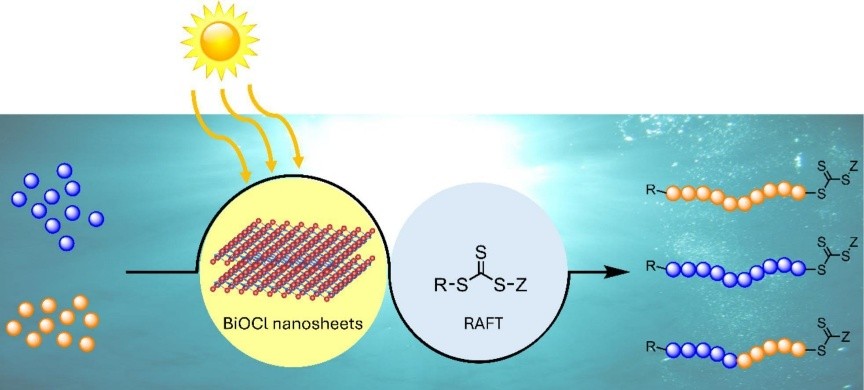
This work investigates BiOCl-mediated photopolymerization of methyl acrylate, 2-hydroxyethyl acrylate, oligo(ethylene glycol) methyl ether methacrylate, and 4-acryloylmorpholine and N,N-dimethylacrylamide under simulated solar irradation. BiOCl can facilitate photoinduced radical polymerization in the presence of trithiocarbonate- and dithioester-based chain transfer agents to afford polymers with controllable molecular weight and narrow dispersity.
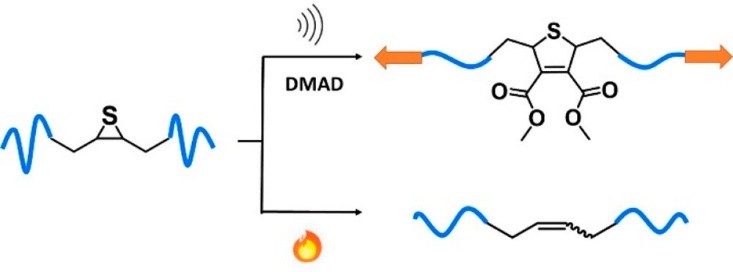
Covalent polymer mechanochemistry uses mechanical force in polymer chains to alter reaction pathways and influence stereoselectivity. This study examines episulfides with alkyl, ester, and phenyl substituents under pulsed ultrasonication. Episulfides with alkyl and phenyl groups undergo C–C bond cleavage, forming reactive intermediates for cis–trans isomerization and cycloaddition, whereas ester-substituted episulfides remain inactive.
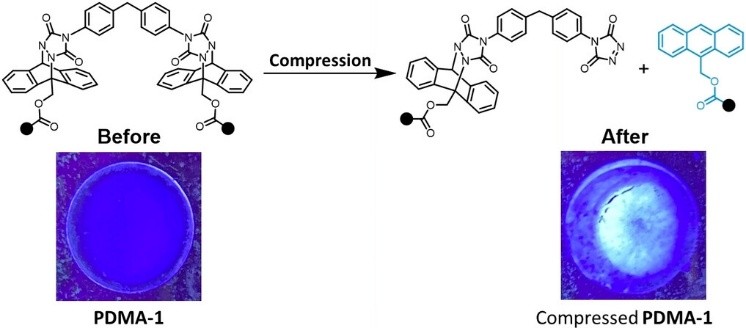
Force-responsive molecules that fluoresce under stress enable damage detection. We report a mechanophore, TAD-An, that undergoes a retro-Diels–Alder reaction under ultrasonication or compression. Compared to MAL-An, TAD-An degrades faster due to its weaker C–N bond (1.59×10⁻⁵ vs. 1.40×10⁻⁵ min⁻¹). Embedded in crosslinked polymers, TAD-An serves as a fluorescent probe for visualizing mechanical damage.
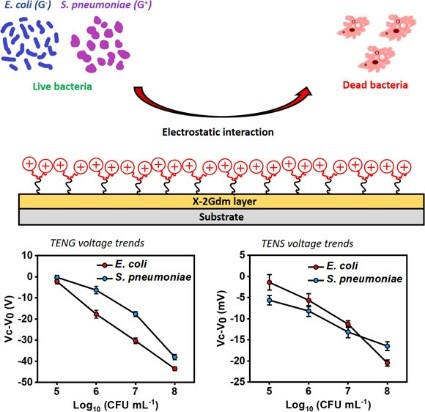
This study presents an antimicrobial poly(norbornene) polymer, 2Gdm, with guanidinium side groups for bacterial detection using triboelectric nanogenerators (TENGs) and nanosensors (TENSs). Bacterial binding alters the polymer’s triboelectric output via electrostatic interactions. The crosslinked form, X-2Gdm, detects E. coli and S. pneumoniae (4×10⁵–4×10⁸ CFU/mL; LOD = 10⁶ CFU/mL). Increased bacterial adsorption reduces surface potential and signal strength, enabling rapid, self-powered bacterial sensing.
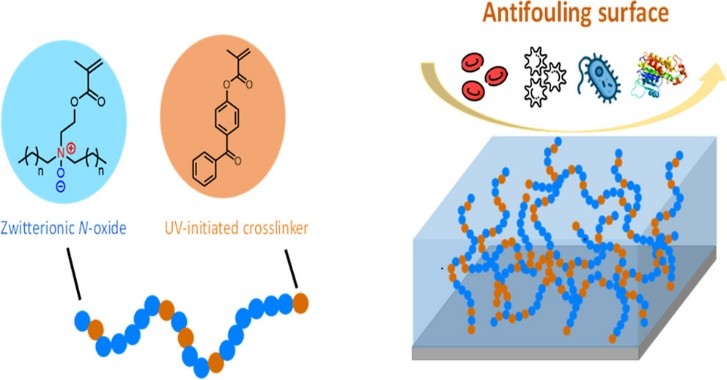
Biofouling limits the performance of medical and sensing devices, and PEG alternatives are needed due to rising allergy concerns. This study introduces poly(amine oxide) (PAO) as a biocompatible antifouling material. Alkyl-substituted, photo-cross-linked PAO coatings on silicon surfaces resist protein adsorption, bacterial attachment, and blood cell adhesion, showing strong potential for biomedical use.
Student Affairs


 Associate Professor Hsueh-Ju Liu
Scroll to top
Associate Professor Hsueh-Ju Liu
Scroll to top